Empty

Feeding for Liver Health: 7 Things Every Pet Parent Should Know

Your pet's liver is one of the hardest-working organs in the body. It helps regulate blood sugar, metabolizes carbohydrates, fats, and proteins, stores fat-soluble vitamins (A, D, E, and K), and supports immune function. So when a veterinarian flags a liver concern, it's natural to wonder what to feed.
In a recent Clinician's Brief webinar, "Feeding Fido & Felix: Feeding the Right Diets for Liver Health," board-certified veterinary internist and nutritionist Dr. John P. Loftus walked through how diet fits into liver care. His central message: liver issues aren't one-size-fits-all, and neither is the right diet. Here are seven takeaways worth bringing to your next vet visit.
1. Not every liver issue calls for a "liver diet"
Prescription liver diets are formulated with highly digestible protein, mixed fiber, low sodium, low copper, and added zinc and vitamin K. They're designed for specific situations, such as copper-associated liver conditions or liver shunts. For many other liver concerns, Dr. Loftus noted, protein doesn't need to be restricted.
2. Lower protein isn't automatically better
Even for dogs with liver shunts, the goal is usually protein closer to their normal requirements, not a drastic cut. Never reduce your pet's protein on your own; ask your vet what level fits your pet's specific diagnosis.
3. The type of protein can matter
For pets with certain liver-related neurological signs, dairy and vegetable proteins tend to be best tolerated, poultry, fish, and eggs work for some pets, and red meat tends to be the hardest to tolerate. But practicality wins: if a dog will only eat one food, your vet may build the plan around it. As Dr. Loftus put it, "Sometimes you break rules."
4. Zero copper isn't the goal
For copper-associated liver conditions, limiting copper is essential. But pets still need some copper, and a truly copper-free diet isn't realistic. Diet alone often isn't enough either, so follow your vet's full plan.
5. Some liver conditions need more protein
One rare skin-and-liver condition in dogs actually calls for a very high-protein diet, with about half of daily energy from protein. It's a powerful reminder that the right diet depends on the exact diagnosis.
6. For cats, eating is everything
When a cat stops eating, fat can build up in the liver quickly. The priority is getting calories back in, which often requires veterinary feeding support. If your cat skips meals for more than a day or two, call your vet right away.
7. Liver-friendly treats are possible
Treats don't have to be off the table. One tip from the webinar: slice the canned version of your pet's prescription diet into biscuits and bake them at low heat. Vegetable-based snacks without added sodium are another good option. Organ meats are generally best avoided for pets with liver shunts.
Where supplements fit in
Antioxidants are a big part of the liver conversation, and supplement quality matters just as much as the ingredient on the label. Bioavailability, sourcing, and formulation all affect what your pet actually receives.
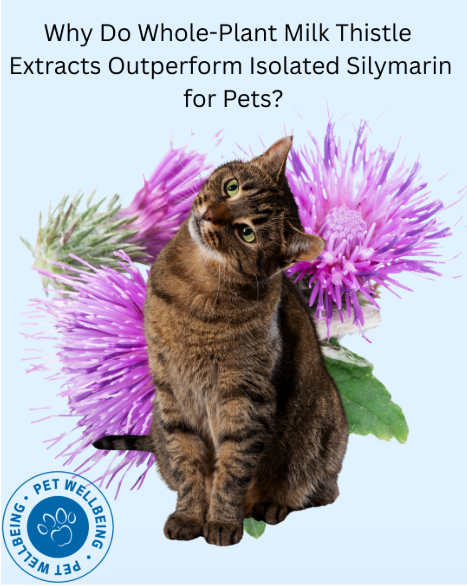
For everyday liver wellness, many holistic pet parents turn to Milk Thistle, one of the most time-honored herbs in Western herbalism. Pet Wellbeing's vet-formulated Milk Thistle supports normal liver function in dogs and cats and is NASC-seal certified for quality. Always share any supplement your pet takes with your vet, so it can be part of a complete plan.
The bottom line
The best liver diet is the one matched to your pet's specific diagnosis, and one your pet will actually eat. Partner with your veterinarian, ask questions, and build a plan that works for your pet and your household.
Source: Loftus, J. P. "Feeding Fido & Felix: Feeding the Right Diets for Liver Health." Clinician's Brief on-demand webinar.
This article is for informational purposes only and is not a substitute for professional veterinary advice, diagnosis or treatment. Always talk to your veterinarian about your pet's health, and before starting any new supplement or treatment.