Empty

Customer Care's Favorite Hacks for Liquid Herbs

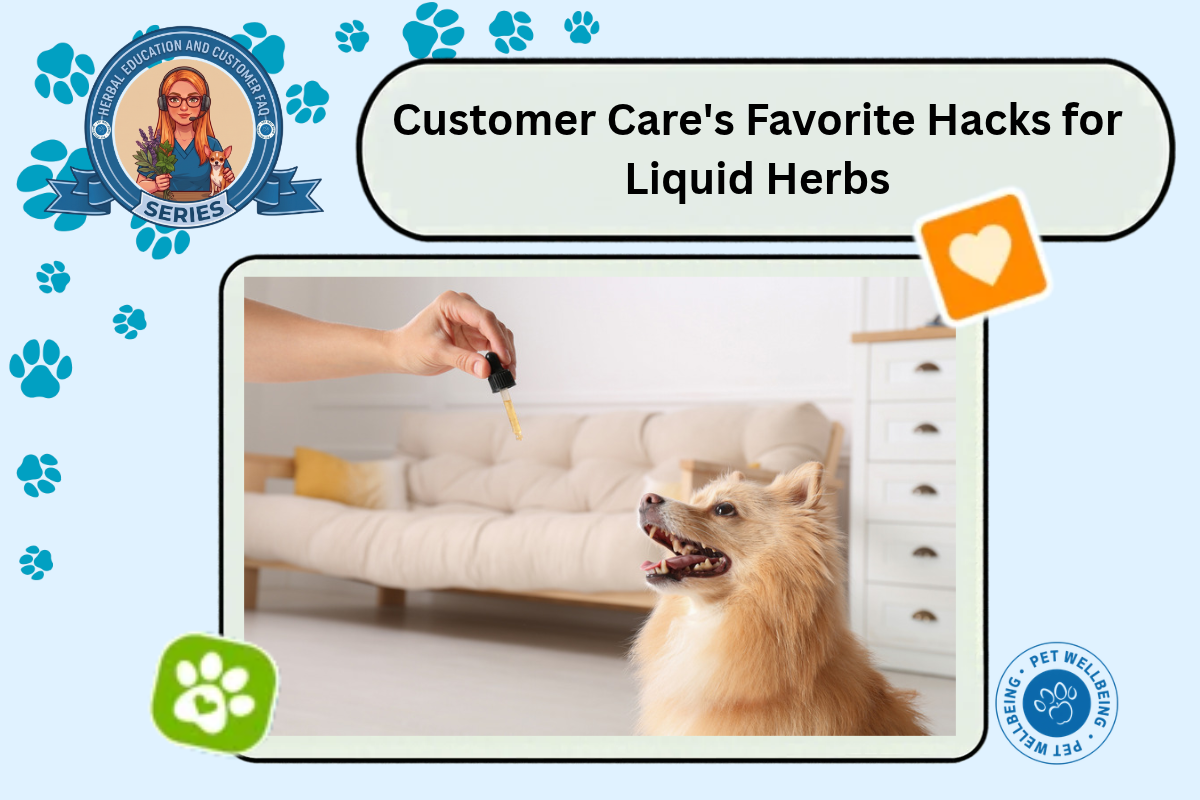
Here on the Pet Wellbeing Customer Care team, we speak with thousands of devoted pet parents every single month. If there is one topic that comes up almost every day, it is this: "I know these herbal drops will support my pet, but they have the nose of a bloodhound and refuse to eat during or after mealtimes when I add them! Help!"
If you are currently staring down a stubborn cat or a skeptical dog who is carefully eating around the edges of their bowl, take a deep breath. You are not alone! While our liquid tinctures use a sweet vegetable glycerin base featuring a plant-based natural bacon flavor (or a natural vegetarian chicken flavor for our soft chews), active herbal extracts still possess earthy, sometimes bitter botanical profiles. Your pet’s super-sniffer knows exactly when their usual routine has changed.
Luckily, we have gathered a treasure trove of field-tested tricks over the years. Here is our official Customer Care playbook for winning over even the pickiest of fur friends.
The "Super Sniffer" Disguise Tactics
When it comes to outsmarting a picky pet, changing how you prepare the supplement makes all the difference.
-
The Fridge Trick: Did you know that chilling our liquid formulas mutes their natural aroma? While our tinctures are shelf-stable at room temperature, keeping the bottle in the refrigerator is our number one hack for making the herbal scent far less noticeable to sensitive noses.
-
The "Slow and Steady" Approach: If your pet is picky or has a sensitive tummy, it is best not to start with the full amount right away. Begin by adding just a single drop (or a quarter of the recommended amount). Once they accept that tiny drop without suspicion for a few days, slowly increase the amount over three to seven days until you reach the full target serving.
-
Divide and Conquer: Most of our tinctures are recommended to be given twice daily. Instead of giving the full serving at those two times, try splitting the daily amount into smaller, more frequent portions spread across three or four servings throughout the day. This dilutes the flavor, making it less detectable.
-
Turn Up the Heat: Gently warming your pet’s wet food or broth) releases strong, savory aromas that easily overpower the scent of the herbs.
The Syringe Technique (When Administering During or After Mealtimes Just Doesn't Work)
First, a golden rule: Please do not put the bottle's built-in dropper directly into your pet's mouth. Not only can this cause your pet unnecessary stress, spitting, or drooling, but if the dropper touches their saliva, it introduces bacteria directly back into your fresh bottle of herbs! (If this happens accidentally, just rinse the dropper thoroughly with warm water before putting it back, and store the bottle in the fridge).
The Better Way: Use the bottle's dropper to measure their amount, and then transfer that liquid into a separate, clean, needle-less plastic syringe. Draw up a little bit of low-sodium and pet-friendly bone broth, tuna water, or plain water into that same plastic syringe to dilute the herbs. Then, gently squirt the diluted mixture into the side or pocket of your pet's cheek.
Special Secrets for Feline Friends
Cats are notoriously suspicious of changes to their routine, texture, or scent. Because feline metabolisms are highly sensitive, you should never withhold food to try and force a cat to eat a supplement. Going without food for even 48 to 72 hours can trigger serious metabolic changes in a cat's liver. Instead of a standoff, try these cat-approved bribes:
-
Savory Liquids: Warm clam juice, tuna water, or plain, cooked chicken broth are absolute magic for masking herbal tinctures for cats.
-
The Nutritional Yeast Trick: Many cats go absolutely wild for the cheesy, umami flavor of nutritional yeast flakes. Sprinkling a tiny bit during or after mealtimes can easily convince them to dive in. (Note: Skip the nutritional yeast if your cat requires specialized kidney or thyroid support, as it contains natural phosphorus).
Exploring Alternative Formats
If liquids are simply off the table, you still have options!
For dogs, our holistic soft chews are a fantastic, highly palatable alternative. We actually offer our most popular liquid formulas, like Kidney Support Gold, Adrenal Harmony Gold, and Throat Gold, in a convenient soft chew format that uses the same herbal formulas as the tinctures! If your dog is still skeptical of the chew, try crumbling it up completely and mixing it into a spoonful of peanut butter or a high-value canned food they only get on special occasions. (Note: Our chews are formulated specifically for canine jaws and digestion, so they are strictly for the pups, not the cats).
For powdered formulas like SPARK or Core Immune CARE, try creating a savory "gravy" by mixing the powder with a splash of broth. If your pet is a "grazer" who picks at dry kibble all day, do not sprinkle the powder over the dry bowl where it will sink to the bottom. Instead, mix the powder into a tiny, separate spoonful of wet meals that they will happily lick clean in one sitting.
Peace of Mind for Pet Parents
One of the most common questions we get is, "If I mix this with tuna water or peanut butter, will it ruin the effectiveness of the herbs?"
The answer is no! Mixing our tinctures, powders, or chews with food or broth does not diminish their supportive botanical benefits one bit. In fact, we strongly encourage giving all herbal supplements during or immediately after meals. Active botanicals are powerful, and giving them on an empty stomach can sometimes cause occasional tummy upset. A full tummy acts as a natural buffer, ensuring maximum comfort and optimal absorption.
Patience is key when introducing something new. Stick with it, try a few different hacks, and you will find the perfect, stress-free routine for your best friend!
Author: Lexi. S, B.A. in Communication and an M.S. in Herbal Product Design and Manufacture
This article is for informational purposes only and is not a substitute for professional veterinary advice, diagnosis or treatment. Always talk to your veterinarian about your pet's health, and before starting any new supplement or treatment.