Empty

Vet Tech Tips: Flakes, Scratching, and Licking

Hello Pet Parent's! Lora Pet Wellbeing's eCARE specialist and Vet Tech is here to provide some helpful tips for your itchy pet this season. Whether it is new scents during the holidays, or dust from finally turning on our furnaces we have you covered. It is always important to work closely with your vet when you notice these changes, and Lora has a few at home tricks you can give a try too.
When winter hitches a ride on dry indoor heating, or seasonal allergies kick up, your dog or cat can go from silky soft, smooth-coated cuddle bug to a walking snowflake dispenser.
But before you go slathering human lotion all over your fur friend(please don't, we’ll talk about why in a second), let’s dive into what dry skin actually means for them and how to safely soothe it at home.
Dry skin (known in the medical world as pruritus when paired with itching) isn't just a mild inconvenience. For your furry family member, it feels like wearing an itchy wool sweater three sizes too small.
-
In Dogs: You’ll notice constant scratching, a dull coat, white dander on their back, or that involuntary, rapid-fire rear-leg kick every time you touch a "good spot."
-
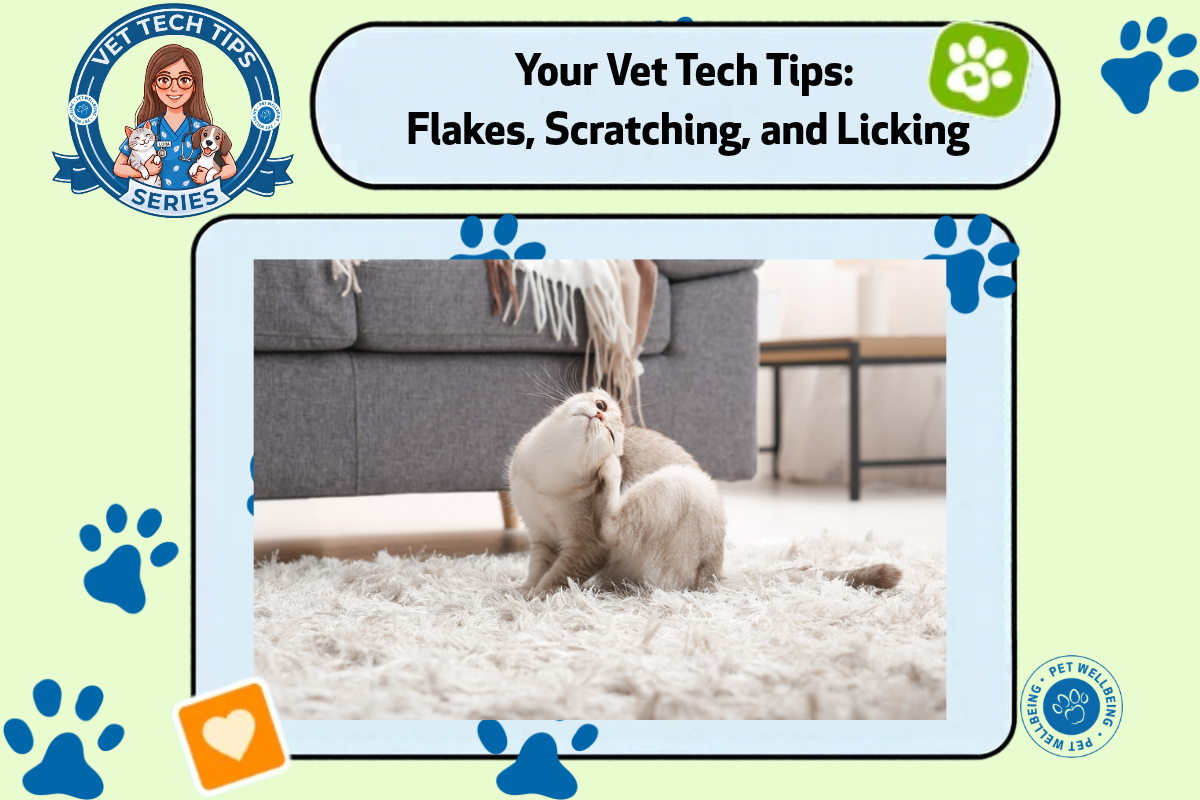
In Cats: Cats are secret over-groomers. Instead of blatant scratching, a cat with dry skin will lick themselves raw, leave small hairballs everywhere, or develop little scab-like bumps along their spine.
When the skin loses its lipid barrier, it loses moisture, becomes micro-fractured, and opens the door for bacteria and yeast to move in like unwanted houseguests.
Vet Tech-Approved Home Hacks That Won't Make a Mess
Before running to the clinic, there are several safe, low-stress items sitting right in your pantry that can offer your pet relief.
The Plain Oatmeal Bath for Dogs and Water-Tolerant Cats
Oatmeal contains natural anti-inflammatory compounds called avenanthramides that form a protective barrier on irritated skin.
-
The Recipe: Blend 1 cup of plain, unflavored rolled oats in a blender until it's a fine powder. Mix it into warm (not hot!) bathwater until it turns milky.
-
Tech Tip: Let your dog soak for 5–10 minutes while showering them with praise (and peanut butter on the wall). For cats who treat water like radioactive acid, try dipping a washcloth in the lukewarm oatmeal mixture and gently dabbing localized dry spots instead.
Cold-Pressed Coconut Oil- Use Sparingly- A Little Goes a Long Way!
Coconut oil is rich in fatty acids that can nourish dry paw pads and cracked elbow calluses.
-
The Trick: Apply a tiny amount directly to dry patches or paws.
-
Tech Warning: Your pet will try to lick it off immediately. Aside from making your floors slick, ingesting too much fat can trigger stomach upset or even pancreatitis in sensitive dogs. Use a tiny dab, massage it in thoroughly, and distract them with a puzzle toy while it absorbs.
Using Omega-3 Fatty Acids in the Daily Routine to Support Hydration from the Inside-Out
-
Omega-3 Fish Oils:Omega-3 fatty acids provide numerous benefits for both cats and dogs, including healthier skin and coat, reduced inflammation for joint and mobility support, and improved heart and kidney health by supporting healthy blood pressure.
Hydration & Humidity Upgrades
-
Humidifiers: Running a cool-mist humidifier near your pet’s favorite sleeping spot works wonders for dry skin and respiratory passages during winter months.
-
Canned Food / Water Fountains: Cats are notorious for not drinking enough water. Switching them to wet food or adding a circulating water fountain increases hydration from the inside out, directly benefiting skin elasticity.
🚫Pantry Items to Avoid- Please step away from the cupboard before using these:
-
Human Lotions & Creams: These often contain zinc, fragrances, or artificial sweeteners like xylitol (birch sugar), which can be highly toxic if licked off.
-
Essential Oils: Tea tree oil, citrus oils, and peppermint oil can be toxic to pets—especially cats, whose livers cannot metabolize certain compounds.
-
Baby Shampoo: "Gentle enough for human babies" does not mean safe for pets. Human skin has a pH of around 5.5, while dog and cat skin sits closer to 6.5–7.5. Human shampoos strip their natural protective oils, making dry skin significantly worse over time.
Check out Pet Wellbeing's skin supporting supplements here:
Dogs
Cats
Author: Lora. F, CVT, VTS
This article is for informational purposes only and is not a substitute for professional veterinary advice, diagnosis or treatment. Always talk to your veterinarian about your pet's health, and before starting any new supplement or treatment.