Empty

By The Numbers: German Chamomile

Welcome to By The Numbers, our series where we unpack the fascinating, exact, and science-backed numbers that go into keeping your dogs and cats thriving.
From the precise pH required for herbal success to the biology of aging pets, holistic veterinary wellness is a science of balance. Let’s dive into this week’s numbers from our latest natural wellness digest!
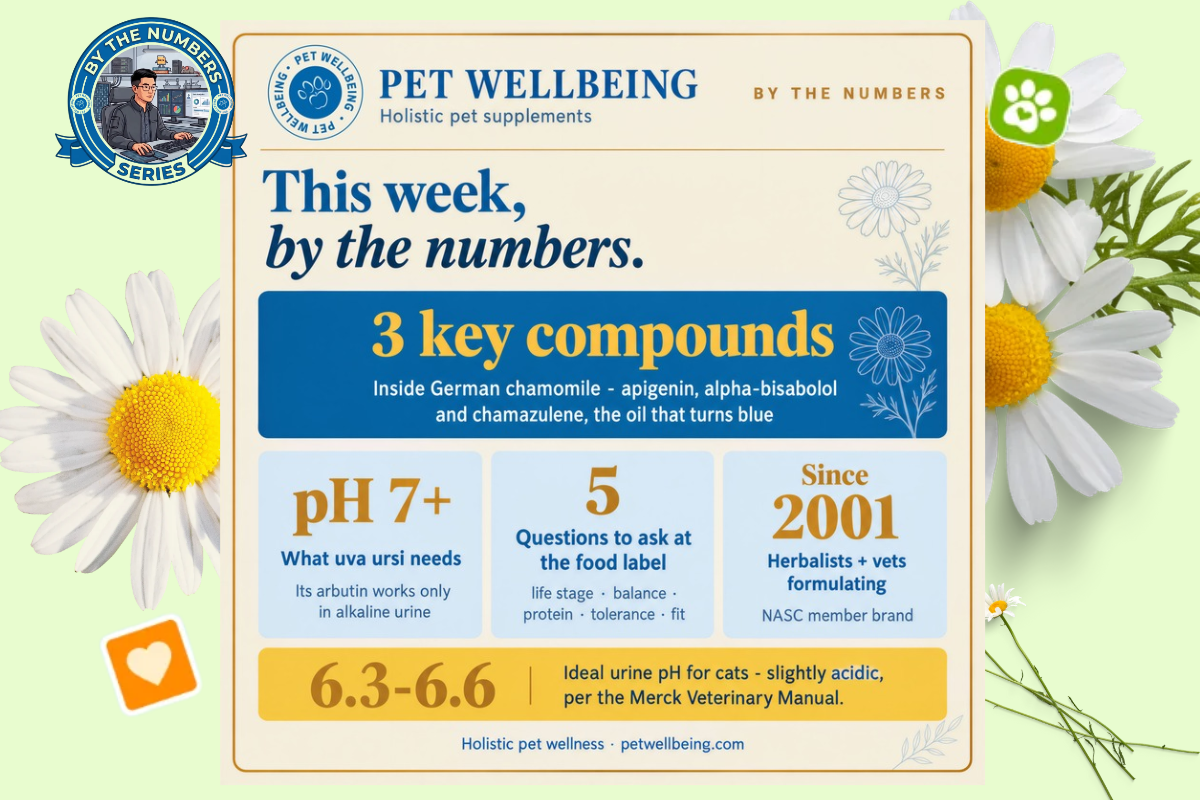
3 Key Compounds: Inside German Chamomile
(apigenin, alpha-bisabolol, and chamazulene)
While many of us know German Chamomile as a soothing bedtime tea, this gentle botanical packs a powerful, multi-system punch for pets. Deep inside the tiny flower lies three heavy-hitting natural compounds:
-
Apigenin: A natural flavonoid that interacts with the central nervous system to help encourage relaxation and ease environmental stress.
-
Alpha-bisabolol: A rich compound studied for its soothing properties and its ability to help maintain comfort in the digestive tract.
-
Chamazulene: A fascinating volatile oil that actually turns a striking, intense blue color during our extraction process, recognized for its natural calming properties.
Together, these three natural components make German Chamomile one of our favorite botanicals for supporting relaxed nervous and digestive systems.
pH 7+ : What Uva Ursi Needs
(Its arbutin works only in alkaline urine)
Uva Ursi (Arctostaphylos uva-ursi), also known as bearberry, is a prized botanical in traditional veterinary herbalism for supporting urinary tract health. But it comes with a metabolic catch: its key active compound, arbutin, requires an alkaline environment (a pH of 7 or higher) to convert effectively into its active form.
Because the bladder's chemistry directly determines how well this botanical can work, understanding your pet’s natural pH and partnering with your vet ensures Uva Ursi is introduced at the absolute best time for optimal urinary support.
6.3–6.6 : The Ideal Urine pH for Cats
(Slightly acidic, per the Merck Veterinary Manual)
While botanicals like Uva Ursi thrive in alkaline environments, normal feline biology is designed to be slightly acidic. According to the Merck Veterinary Manual, a healthy cat’s ideal urine pH sits consistently between 6.3 and 6.6.
Maintaining this narrow, slightly acidic sweet spot is vital for preventing the natural formation of bladder crystals and supporting long-term urinary tract integrity. Monitoring your cat's urinary habits and offering targeted, moisture-rich nutrition is a great way to help them stay within this healthy range.
5 Questions to Ask at the Food Label
(life stage · balance · protein · tolerance · fit)
Choosing the right daily diet is one of the most proactive decisions you can make. When reviewing a pet food label, simplify the search by asking these 5 core questions:
-
Life Stage: Is this recipe formulated specifically for my pet's current stage of life (e.g., puppy/kitten, adult, or senior)?
-
Balance: Does it meet AAFCO standards for "complete and balanced," or is it intended for supplemental feeding?
-
Protein: Is a high-quality animal protein identified as the very first ingredient?
-
Tolerance: Are there any ingredients (like specific grains or proteins) that my pet has shown sensitivity to in the past?
-
Fit: Does the calorie density and nutrient profile match my pet's daily activity levels and individual health needs?
Since 2001: Herbalists + Vets Formulating
(Our NASC member history)
Our biggest number is 25 years of dedication. Since 2001, Pet Wellbeing has been combining the traditional wisdom of master herbalists with the clinical research of holistic veterinarians to craft the safest, highest-quality supplements for your companions.
As a proud, long-time member of the National Animal Supplement Council (NASC), our historic journey is rooted in uncompromising quality, rigorous ingredient safety, and third-party testing. We believe that when your pets feel their best, your whole family thrives and we are honored to be a part of your wellness journey.
What number surprised you most this week? Leave a comment below or ask our herbal experts your wellness questions and stay tuned for our next By The Numbers digest!
These statements have not been evaluated by the Food and Drug Administration. These products are not intended to diagnose, treat, cure, or prevent any disease. Always consult your veterinarian before starting new supplements or making significant changes to your pet’s wellness routine
Shop Pet Wellbeing's Chamomile here:
Chamomile - Supports a Healthy Calm and Digestive Function in Dogs
Chamomile - Supports a Healthy Calm and Digestive Function in Cats
Author: Weizhen. L, BBA, Data & Marketing Strategy, Pet Wellbeing
This article is for informational purposes only and is not a substitute for professional veterinary advice, diagnosis or treatment. Always talk to your veterinarian about your pet's health, and before starting any new supplement or treatment.