Empty

Why Taurine Is Essential for Cats

Welcome to another edition of By The Numbers, where we explore the exact nutritional science behind keeping your companions happy and healthy.
This week, we are looking at feline biology and an essential nutrient that every cat parent should know: taurine. While dogs and humans can easily synthesize this amino acid from other proteins, cats have a unique metabolism that makes dietary taurine completely non-negotiable.
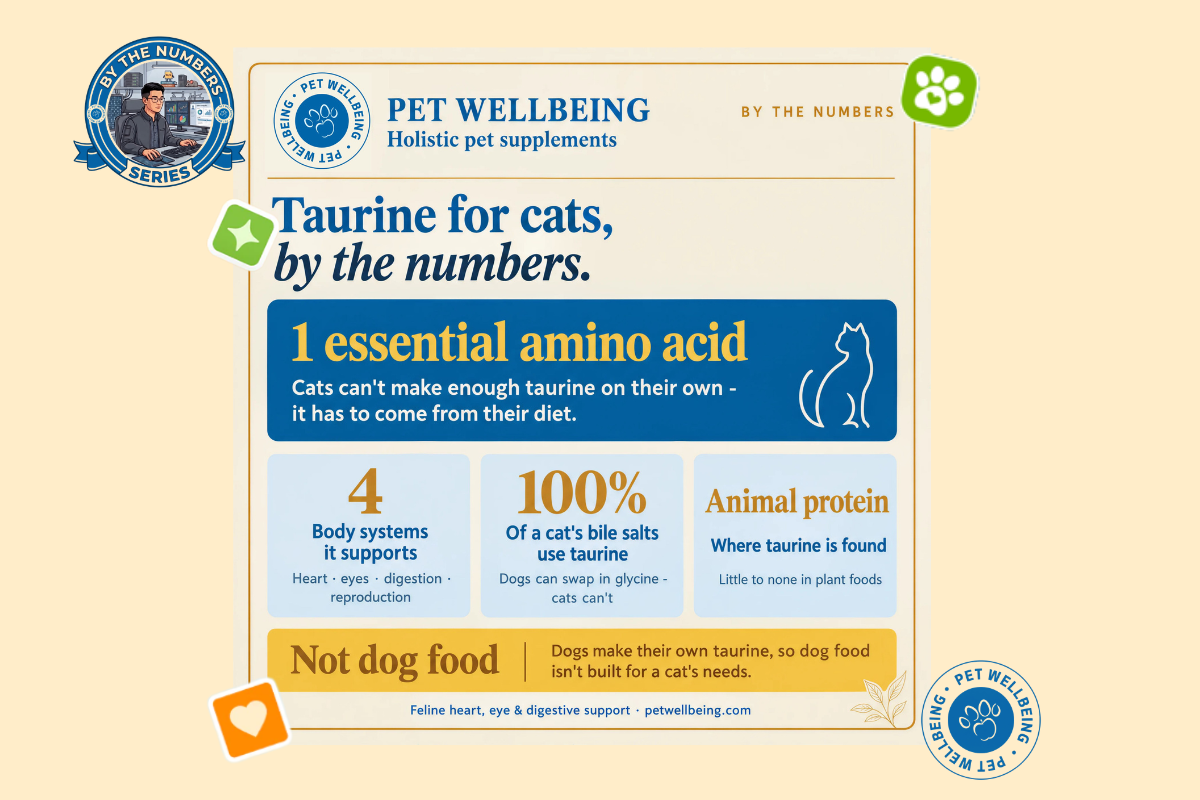
Let us break down taurine for cats, by the numbers!
1 Essential Amino Acid
(Cats cannot make enough taurine on their own)
Most mammals use specialized enzymes to convert common dietary amino acids like methionine and cysteine into taurine. Cats, however, naturally produce very low levels of these conversion enzymes. Because their bodies cannot synthesize adequate amounts internally, 100% of their daily requirement must come directly from their food.
4 Vital Body Systems Supported
(Heart, eyes, digestion, reproduction)
Taurine is an active building block across four major physiological systems in felines:
-
Cardiovascular Function: Taurine helps regulate calcium ion flow inside cardiac cells, which supports normal heart muscle contractions and healthy circulatory tone.
-
Retinal Integrity: Highly concentrated within feline retinal tissue, taurine helps maintain normal vision and protects photoreceptors from routine oxidative stress.
-
Digestive Comfort: It is an indispensable component of bile, aiding in the smooth digestion and absorption of dietary fats.
-
Reproductive Health: Adequate intake supports healthy maternal wellness and normal fetal development.
100% of a Cat’s Bile Salts Use Taurine
(Dogs can swap in glycine; cats cannot)
Here is where feline digestion is truly unique: dogs and humans can use either glycine or taurine to conjugate bile acids in the liver. Cats, on the other hand, are biologically locked into using taurine exclusively.
Because bile is constantly used to digest fats and is excreted through daily digestion, a cat's body experiences a continuous, rapid loss of taurine. Without steady dietary replacement, their reserves deplete quickly.
Animal Protein: Where Taurine Is Found
(Little to none in plant foods)
As obligate carnivores, cats are designed to thrive on meat. Taurine is found naturally and abundantly in animal muscle meats, organ meats, and seafood, with virtually none present in plant-based ingredients. This is one of the primary reasons cats cannot thrive on vegetarian or vegan formulations.
Not Dog Food
(Dogs make their own taurine; dog food is not built for a cat's needs)
While sharing a bite of food may seem harmless, dog food formulas are not fortified with the high taurine concentrations that felines require. Because dogs naturally manufacture their own taurine, their food is designed around very different nutritional baselines. Long-term feeding of canine food to cats can lead to significant nutritional shortfalls.
Grounded in Science, Formulated for Wellness
Whether you are caring for a senior companion with changing digestion, preparing balanced homemade meals, or simply reviewing the ingredient panel on your cat’s favorite dish, ensuring adequate bioavailable taurine is a daily priority.
Partnering with your veterinarian and choosing high-quality, animal-rich nutrition ensures your cat has the exact nutritional tools needed for lifelong vitality.
These statements have not been evaluated by the Food and Drug Administration. This product is not intended to diagnose, treat, cure, or prevent any disease. Always consult your veterinarian before making significant changes to your pet’s diet or daily supplement routine.
Author: Weizhen Liang, BBA, Data & Marketing Strategy, Pet Wellbeing
Reviewed by Mandy Tinevez, CHT (Clinical Herbal Therapist)
This article is for informational purposes only and is not a substitute for professional veterinary advice, diagnosis or treatment. Always talk to your veterinarian about your pet's health, and before starting any new supplement or treatment.