Empty

Vet Tech Series: Cardiovascular Health in Cats: Signs, Observations, and Daily Support

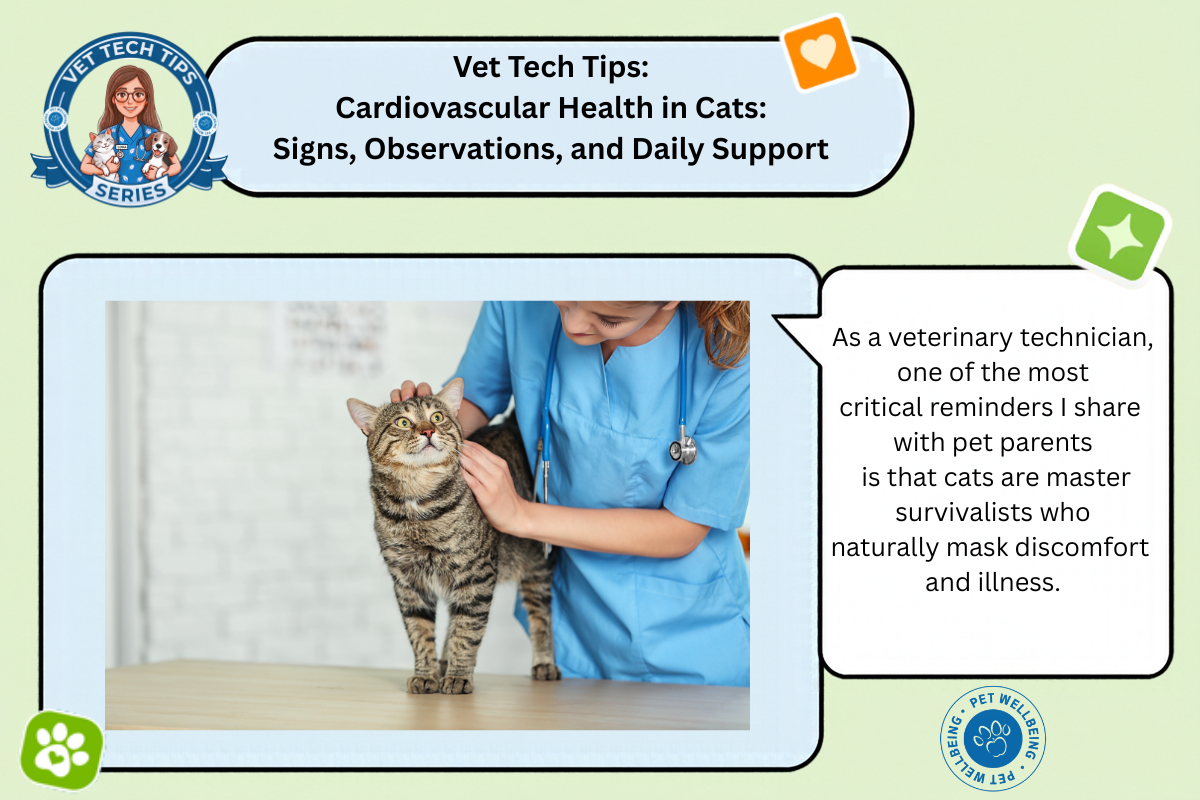
As a veterinary technician, one of the most critical reminders I share with pet parents is that cats are master survivalists who naturally mask discomfort and illness.
Because felines rarely show obvious distress until a condition has progressed, subtle shifts in their daily routine can offer the earliest clues that their cardiovascular system needs attention. Understanding what to look for and partnering closely with your primary veterinarian gives your companion the best opportunity for timely care and long-term comfort.
5 Common Signs of Cardiac Concerns
When monitoring your cat at home, keep a close eye out for these five key behavioral and physical changes:
-
Changes in Breathing Patterns A healthy cat at rest typically breathes smoothly and quietly. An elevated resting respiration rate, visible abdominal effort while breathing, or shallow, rapid breaths are important indicators that require prompt veterinary evaluation.
-
Uncharacteristic Lethargy While cats love their naps, there is a distinct difference between peaceful rest and low energy. You may notice your cat sleeping significantly more, losing interest in interactive play, or hesitating before jumping onto familiar furniture.
-
Decreased Appetite or Gradual Weight Loss Any shift in eating habits, subtle loss of interest in favorite foods, or progressive, unexplained weight changes should always be brought to your veterinarian's attention.
-
Sudden Weakness or Fainting Episodes Unsteadiness on their paws, sudden stumbling, or fainting episodes indicate reduced oxygenation or circulation and require immediate professional assessment.
-
Sudden Hind-Leg Weakness or Loss of Mobility If a cat suddenly loses the use of their back legs, vocalizes in pain, or has cool paws, treat this as a critical veterinary emergency requiring urgent medical attention.
Thoughtful, Integrative Support at Home
Caring for a feline friend with cardiovascular concerns involves creating a balanced, supportive daily routine in close collaboration with your veterinary care team.
1. Follow Veterinary Guidance Carefully
Cardiovascular management often involves targeted conventional prescriptions, which may include diuretics, ACE inhibitors, beta blockers, or circulation-supportive therapies. Always administer medications exactly as directed by your vet, and never alter dosages or discontinue treatments without their explicit guidance.
2. Introduce Complementary, Targeted Support
When approved by your veterinarian, high-quality nutritional and herbal supplements can work alongside conventional care to support baseline tissue resilience and circulatory balance:
-
Pet Wellbeing Omega-3 Icelandic Fish Oil: Pure marine oil rich in active EPA and DHA to help maintain vascular elasticity, support normal blood flow, and provide foundational cellular nourishment.
-
Pet Wellbeing Core Immune Care: Delivers bioavailable L-taurine and L-carnitine, two vital amino acids that support cardiac muscle cellular energy, fatty acid metabolism, and normal vascular health while helping protect cell membranes from routine oxidative stress.
Important Note: Always consult your veterinarian before introducing any new supplement, particularly if your cat is currently receiving prescription cardiac, blood pressure, kidney, or anticoagulant medications.
3. Establish a Low-Stress Living Space
Make daily life effortless for your cat by placing water, meals, litter boxes, and favorite sleeping spots on the main floor so they do not have to navigate stairs. Keep their living environment calm, quiet, and temperature-controlled, avoiding forced activity or sudden excitement that could leave them feeling winded.
4. Track Daily Observations in a Journal
Keeping a simple daily log can make a tremendous difference for your veterinary appointments. Track your cat’s resting respiratory rate (counting breaths per minute while they are deeply sleeping), daily appetite, litter box habits, weight trends, and medication times. These objective details provide your clinical team with invaluable context.
When to Seek Immediate Emergency Care
Certain signs require immediate, emergency veterinary intervention rather than waiting for regular office hours:
-
Open-mouth breathing or panting
-
Significant distress, gasping, or blue/pale gum color
-
Sudden weakness, stumbling, or collapse
-
Inability to move or put weight on the hind limbs
Compassionate Care Every Step of the Way
Navigating cardiovascular concerns in a beloved feline can feel daunting, but you never have to walk this path alone. By pairing keen observation at home with expert veterinary guidance, a nourishing diet, and gentle supportive wellness tools, you can build a thoughtful, comprehensive plan that helps your cat stay comfortable and content.
These statements have not been evaluated by the Food and Drug Administration. These products are not intended to diagnose, treat, cure, or prevent any disease. For use in cats only. Always consult your veterinarian before introducing new supplements or making adjustments to your pet's current medical care plan.
This article is for informational purposes only and is not a substitute for professional veterinary advice, diagnosis or treatment. Always talk to your veterinarian about your pet's health, and before starting any new supplement or treatment.