

Empty

The Healing Power of Plants: Why Herbalism Is Changing the Way We Care for Our Pets

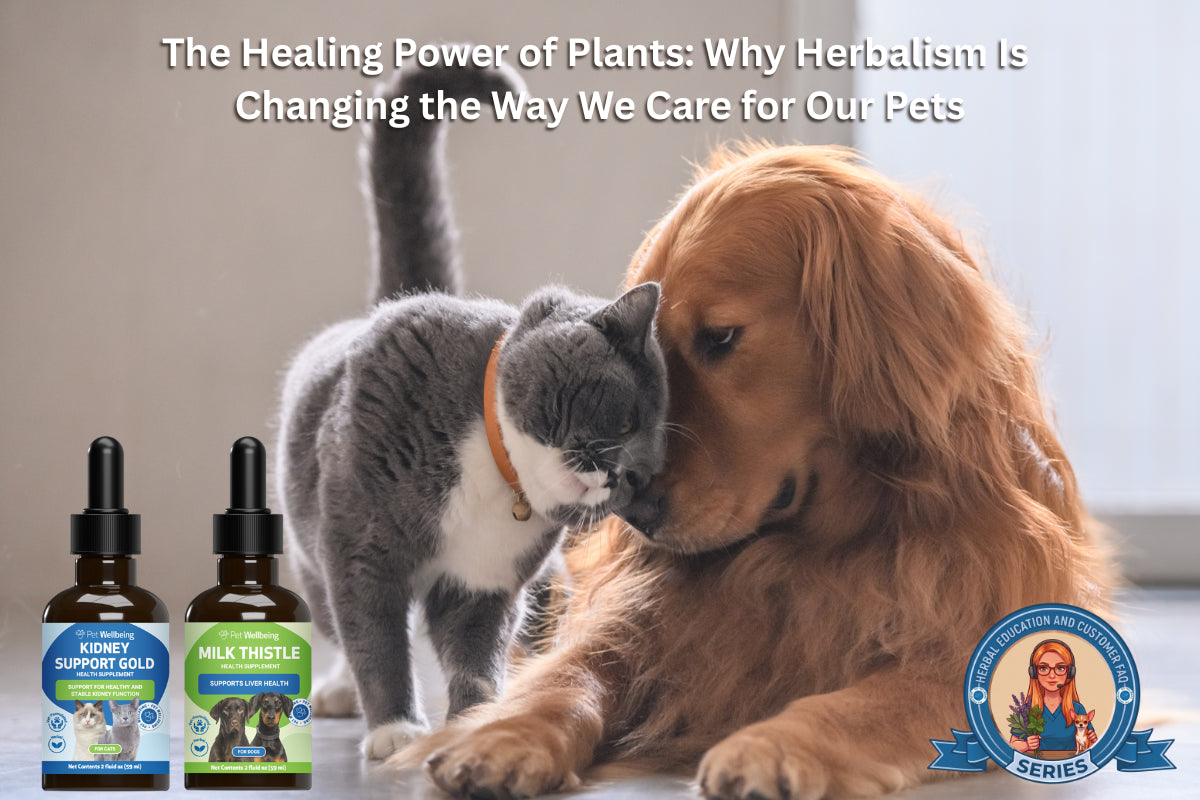
If you've ever brewed chamomile tea to unwind after a long day or reached for peppermint to settle your stomach, you already understand the quiet power of plants. For centuries, people have turned to nature for health support. Today, more pet parents and holistic veterinarians are finding that dogs and cats can benefit from that same botanical wisdom.
Supporting balance, not just symptoms
Conventional care often focuses on the immediate issue in front of it, and it has an important place in your pet's health. Botanical medicine looks through a wider lens. Whether rooted in Traditional Chinese Veterinary Medicine, Ayurveda, or Western herbalism, the goal of herbal support is to help the body maintain its natural internal balance, known as homeostasis.
Rather than focusing only on a surface concern like itchy skin or a stiff joint, herbs support the body's underlying systems to promote long-term vitality.
The power of whole-plant synergy
Herbalists work with whole leaves, flowers, roots, and berries instead of isolating a single compound in a lab. Each plant contains hundreds of natural phytonutrients, antioxidants, and trace constituents that work together.
This is called synergy: a plant's constituents enhance one another's benefits and help balance each other naturally. When complementary herbs are blended into a thoughtful formula, that synergy extends across the whole blend for a gentle, multi-targeted approach to wellness (Wynn & Fougère, 2007).
Proactive care, from the kidneys to the gut
Herbalism shines in proactive care. Restorative botanicals, traditionally called tonics, are given to gently strengthen specific organ systems over time.
Kidney tonics are a great example. Kidney Support Gold is Pet Wellbeing's vet-formulated herbal blend that supports healthy kidney function in dogs and cats, especially as they age. For liver support, Milk Thistle is one of the most time-honored herbs in Western herbalism and supports normal liver function.
Gut health matters too. Roughly 80 percent of your pet's immune tissue lives in the gut (Tizard, 2018), so protecting a healthy intestinal microbiome is essential. Natural botanicals and prebiotics help maintain the beneficial microflora that keep your companion thriving.
Gentle support that works alongside your vet
Because herbs are whole, natural foods for the body, many pets take them well as part of a daily routine. Herbal support also fits naturally into integrative veterinary medicine, where plant-based care works alongside modern treatment.
It's not a new idea. Roughly one-quarter of modern pharmaceuticals were originally derived from plants (Pan et al., 2013; Newman & Cragg, 2020). Used as a supportive companion to conventional care, herbs can help maintain healthy organ function and physical energy, and help your pet enjoy the best possible quality of life.
Natural doesn't mean one-size-fits-all, though. Talk with your veterinarian before starting any new supplement, especially if your pet takes medication.
References
- Wynn, S. G., & Fougère, B. J. (2007). Veterinary Herbal Medicine. Mosby Elsevier.
- Tizard, I. R. (2018). Veterinary Immunology (10th ed.). Elsevier.
- Pan, S. Y., et al. (2013). Historical perspective of traditional indigenous medical practices: the current renaissance and conservation of natural resources. Evidence-Based Complementary and Alternative Medicine, 2013: 525340.
- Newman, D. J., & Cragg, G. M. (2020). Natural Products as Sources of New Drugs over the Nearly Four Decades from 01/1981 to 12/2019. Journal of Natural Products, 83(3), 770–803.
This article is for informational purposes only and is not a substitute for professional veterinary advice, diagnosis or treatment. Always talk to your veterinarian about your pet's health, and before starting any new supplement or treatment.




1 comment
My 4 month old puppy has a limp . Do you have a tincture for anti inflammatory ?